
Permeability estimates using different methods for turbidite reservoir in Hai Thach field, Nam Con Son basin
Abstract
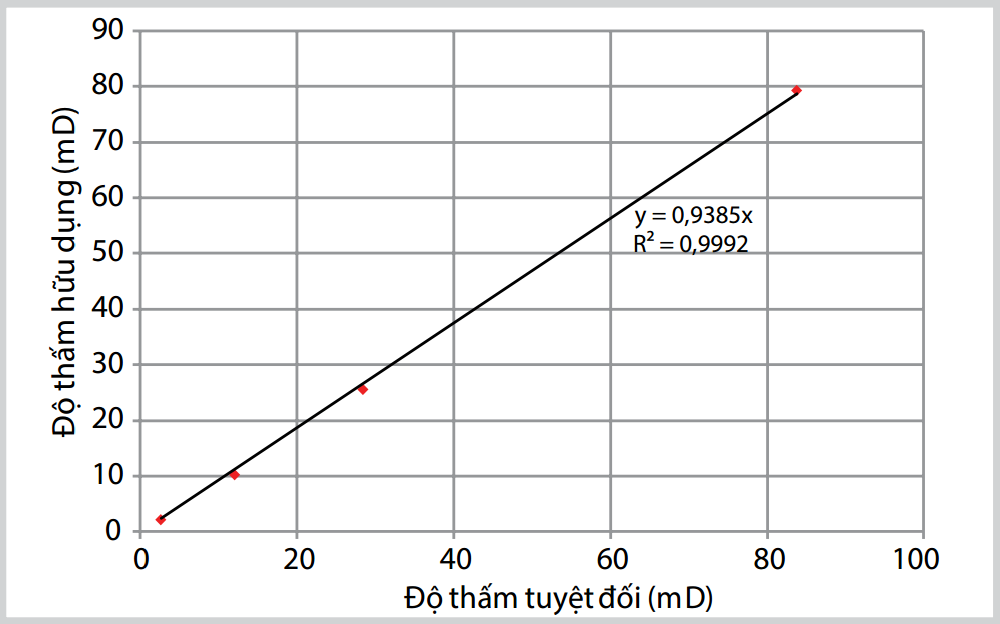
Reservoir permeability along with its distribution is an extremely important parameter for reservoir management and development. Permeability can be determined by several methods but the results obtained could be very different, especially for poor production wells. This article presents the results from four permeability estimating methods applied to four wells penetrating a turbidite reservoir (Sand30) of Hai Thach field, Nam Con Son basin, including three producers (HT-C, HT-H and HT-I) and an exploration well (HT-X). Since the wells have different deliverability, the accurate determination of permeability and its distribution for Sand30 is an important requirement for the effective production of this turbidite reservoir. In addition, factors that could lead to the disagreement between permeability values derived from these methods are discussed in details by the authors.
References
2. I.M.Buhidma, W.C.Chu, P.K.Singh. The use of computers in pressure transient analysis. SPE Annual Technical Conference and Exhibition, Washington D.C. 4 - 7 October, 1992.
3. Usman Ahmed, S.F.Crary, G.R Coates. Permeability estimation: The various sources and their interrelationships. Journal of Petroleum Technology. 1991; 43(5): p. 578 - 587
1. The Author assigns all copyright in and to the article (the Work) to the Petrovietnam Journal, including the right to publish, republish, transmit, sell and distribute the Work in whole or in part in electronic and print editions of the Journal, in all media of expression now known or later developed.
2. By this assignment of copyright to the Petrovietnam Journal, reproduction, posting, transmission, distribution or other use of the Work in whole or in part in any medium by the Author requires a full citation to the Journal, suitable in form and content as follows: title of article, authors’ names, journal title, volume, issue, year, copyright owner as specified in the Journal, DOI number. Links to the final article published on the website of the Journal are encouraged.


